

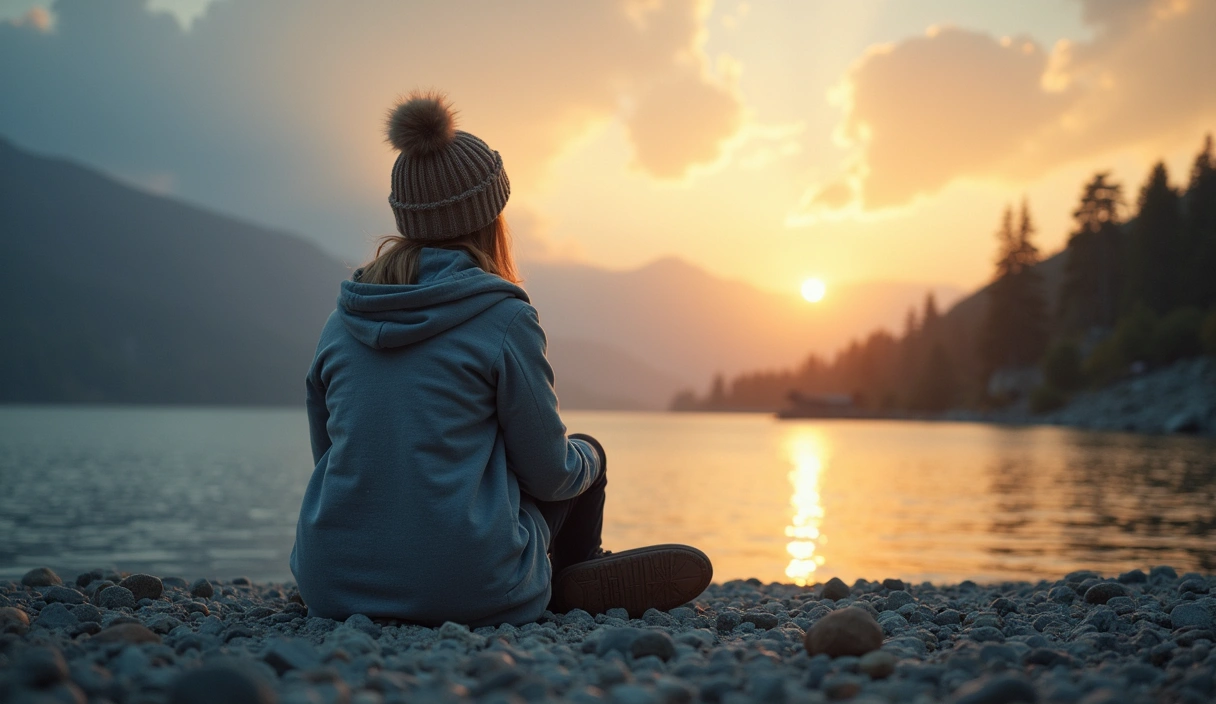
Spending time alone outdoors may help reduce loneliness, according to new research. The study, published in Health and Place, found that time spent on or along a lake was linked to lower feelings of loneliness. Social contact was not the main reason. Instead, feeling connected to nature and having an emotional bond to a specific place were the factors most strongly tied to reduced loneliness. Doing these activities alone had an even stronger effect.
What the research found
Researchers in Norway surveyed 2,544 people living near the country’s largest lake. Participants reported how often they did activities such as walking along the shore, swimming, paddling, and fishing, and how often they did these activities alone.
Connectedness to nature, described as a sense of kinship with animals, plants, and the broader living world, showed the strongest link to reduced loneliness across all three measures used in the study. Attachment to a specific place, in this case the lake, was also linked to lower loneliness, especially the type related to feeling disconnected from a broader community.
Not all activities had the same effect. Walking along the shore, enjoying life by the water, and walking on the ice showed the strongest ties to feeling connected to nature. Exercising along the shore had the weakest link. Researchers suggested this may be because attention is directed differently. Activities that involve sensory noticing and aesthetic appreciation appear to deepen the bond with nature, while exercise-focused activity tends not to.
Why nature helps us feel more connected
The study suggests that quiet time outdoors works through two types of connection. Internal connection: solitude gives mental space to turn attention outward toward the environment rather than inward toward conversation or distraction. This supports reflection, mental clarity, and emotional regulation. External connection: feeling emotionally bonded to a place creates a sense of belonging that does not depend on other people being present. People are not alone in the existential sense; they are part of something larger.
This helps explain why the effect was stronger when people did lake activities alone. Without the social component, there is more room for a felt sense of oneness with nature. The benefits extend beyond loneliness, including reduced stress hormones and improved immunity.
Solitude versus isolation
Solitude is not the same as isolation. Solitude is chosen and intentional time alone that feels restorative. Isolation is unwanted and involves a painful sense of being cut off from others. The researchers noted that too much and too little time alone can be harmful. This finding does not mean isolating yourself in nature is a reliable path to well-being. It means that intentional solo time outdoors, when paying attention to surroundings, may help ease feelings of disconnection.
The study is observational and cannot prove cause and effect. Lonelier people may actively seek out nature to compensate for unmet social needs.
How to put this into practice
Starting small works. A 20-minute walk in a green space or by water can shift attention outward. Going alone on purpose, rather than viewing solo time as a fallback, makes it an intentional practice. Paying attention matters: activities involving sensory noticing, such as looking at the water, listening to birds, or feeling the air, deepen the connection more than exercise-focused activity. Leaving the podcast at home occasionally can help. Finding a place that resonates builds an emotional bond over time by returning to the same trail, park, or shoreline. Being honest about needs is important: if feeling isolated and craving human connection, solo nature time is not a substitute. But if feeling overstimulated, drained, or disconnected from oneself, it may help.
The takeaway
Loneliness is increasingly recognized as a major public health concern, but solutions are not always accessible or scalable. This research points to a simple tool: intentional solo time outdoors. The goal is not to isolate more. It is to be more intentional about how and where time alone is spent. For anyone balancing a busy schedule, stepping outside alone is not avoidance. It may be one of the most restorative things a person can do and a path toward a more psychologically rich life.
